
Read Sample
8 of 53 pages
Daoist Scriptural Studies
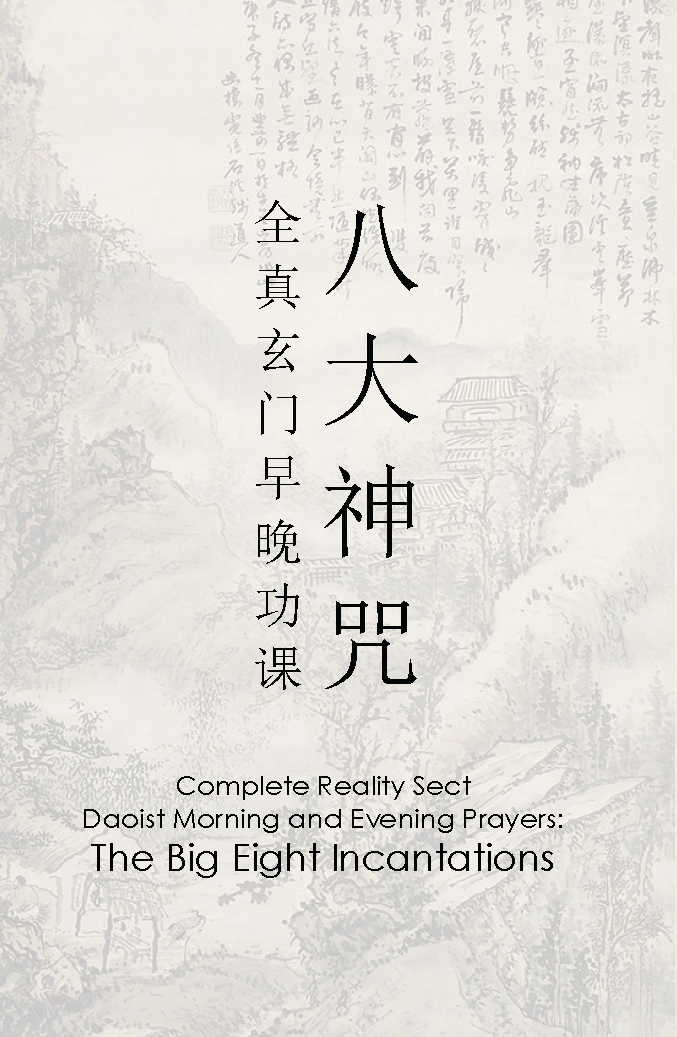
Complete Reality Sect
Daoist Morning and Evening Prayers:
The Big Eight Incantations
Spiritual nourishment comes from the triad of prayer (speaking), meditation (listening), and practice (being). Each is an important component to the foundation of spiritual practice. Subtract just one leg, and the table will no longer stand.
Prayer can be a conduit; provide clarity and insight; and bring us into alignment. Make no mistake; prayer changes us.
Listening, perceiving, and being provide an orientation towards alignment and aligns us, and places our Will in the service of the Dao. From this place of connectedness, we experience abundance, all desire dissipates, and only union exists. Then, we are truly living authentically.
Prayer can help us do that.
Prayer can be a conduit; provide clarity and insight; and bring us into alignment. Make no mistake; prayer changes us.
Listening, perceiving, and being provide an orientation towards alignment and aligns us, and places our Will in the service of the Dao. From this place of connectedness, we experience abundance, all desire dissipates, and only union exists. Then, we are truly living authentically.
We do not pray for personal material gain; we don’t pray with acquired motivation. Rather, we pray in order to open our hearts and minds towards the Dao, and to virtue that is vast and pure.
Our aspiration is to be clear, grounded, and centered with an open heart, connected to all.
Introduction
Compiling the Morning and Evening Prayers has been a labor of love and awakening that has taken years to manifest. This personal journey into the learning and appreciation of ritual and daily practice did not come easily.
Many Daoist practitioners outside of China tend to dismiss some Daoist rituals and ceremonies as superstitious, antiquated, or relics of a more ignorant age. Additionally, they may perceive the ritual of morning prayers to be dogmatic, awkward, and rigid -- the antithesis of the primary Daoist principle of naturalness or Ziran (自然).
My natural temperament, like many in today’s society, rebels against constraint, dogmatism, and “forced” ritual. I recognize this attitude in many who consider themselves to be “spiritual” as opposed to “religious.”
Many Daoist practitioners outside of China tend to dismiss some Daoist rituals and ceremonies as superstitious, antiquated, or relics of a more ignorant age. Additionally, they may perceive the ritual of morning prayers to be dogmatic, awkward, and rigid -- the antithesis of the primary Daoist principle of naturalness or Ziran (自然).
I understand this perception and see its validity, however, immersion into Daoist rituals and ceremonies has allowed me to come to realize the deep value of the practice of prayer as ritual. Ritual, an inner or outer practice, allows us to break free from the routine patterns of the mundane, and returns us to the sacred.
The use of ritual provides scaffolding from which we may use form to return to the formless. We apply the inner truth of ritual until it is engrained, to find that gradually it is no longer needed.
"When you get the image, forget the words; when you get the intent, forget the image. Then you will be close." - Zhang Bo Duan
From the unformed we manifest and so to the unformed we must return.
It has been suggested by scholars that there are two principle forms of Daoism: daojia and daojiao. Daojia being the mystical and philosophical teachings and trainings of the sages, as found in texts and scriptures, and daojiao consisting of the institutional religious activities of Daoist temples, including rituals and ceremonies performed by priests. This is a false division.
Daoism, through its myriad forms and practices, can offer most things to most people.
This is illustrated by the Daoist saying, Tóng Guī Dà Daò (同归大道), “all roads lead to the same destination”. There is one Dao, yet there are ten thousand ways to practice. One Way is not better than another, although they manifest differently. Each person will find their own unique way. Consequently, practices, talismans, and rituals range from the simple to the complex.
Each of us has their own path. My Dao is not your Dao. My understanding is not yours.
Chapter One of the Dao De Jing states, “the Dao that can be spoken is not the true Dao.” Another interpretation could be “the known path is not the true path…”
Our paths unfold one step at a time, one foot in front of the other. At many points you cannot see the road ahead of you. This is where faith and trust come into play.
"Faith is taking the first step even when you don’t see the whole staircase." – Martin Luther King
Faith requires surrender. And for myself, part of that surrender has been to the form of ritual. Surrendering, yielding, and receiving the ritual, I have found the sacred, experienced the connection to lineage, and come to peace.
Why Only Eight Prayers?
The complete Morning and Evening Prayers of the Complete Reality Sect (全真玄门早晚功课) are composed of dozens of prayers and incantations.
Their breadth and scope are awe-inspiring. Together, they represent a complete practice, but the individual prayers and incantations can also be used individually within specific practices and rituals.
The “Big Eight” Incantations have been selected from the complete set because they lay the foundation, and because they represent a minimal standard of practice for a diligent disciple. As the groundwork upon which all subsequent Morning and Evening Prayers are built, they clear what is turbid and unsettled.
They then bring peace, clarity, and transformation of the heart, body, mind, and spirit. With this foundation solidly in place, our journey will have merit, and we are able to find true tranquility.
Their breadth and scope are awe-inspiring. Together, they represent a complete practice, but the individual prayers and incantations can also be used individually within specific practices and rituals.
The “Big Eight” Incantations have been selected from the complete set because they lay the foundation, and because they represent a minimal standard of practice for a diligent disciple. As the groundwork upon which all subsequent Morning and Evening Prayers are built, they clear what is turbid and unsettled.
They then bring peace, clarity, and transformation of the heart, body, mind, and spirit. With this foundation solidly in place, our journey will have merit, and we are able to find true tranquility.
Practice Notes
The prayers are not just meant to be read, but to be embodied. There are different degrees of proficiency as regards to prayer recitation: 念 (niàn), 诵 (sòng), and 背 (bèi). 念 (niàn) is the act of simply reading the prayers. 诵 (song) is chanting the prayers with rhythm. 背 (bèi) involves a complete embodiment of the prayers such that with every iteration the body resonates like a bell.
The embodiment of each prayer brings with it an alchemical transformation on the practitioner. Beyond that, each prayer also has specific uses or applications, 用法 (yòng fǎ). These are distinct functions beyond that of the personal cultivative effect. These functions and effects are gradually revealed to the practitioner as the prayer is worked.
The suggested method of practice is to recite all the prayers, in sequence, each day, preferably between 5 – 7 am. In addition to this daily recitation practice, the practitioner should also begin to memorize and practice each prayer individually.
The practitioner is strongly encouraged to work on a specific prayer for one-hour each day for a minimum of 81 days. During the minimum 81-day evolution, a practitioner should progress from 念 (niàn) to 诵 (song) to 背 (bèi) with the prayer. Practitioners begin with Purify the Heart Incantation and eventually work their way through all of the prayers.
It should be clearly understood that once a student has manifested the appropriate response, it does not mean that they are done with that prayer. It simply means that the prayer has now become functional. With continued diligence, each prayer will continue to effect deeper changes in the practitioner.
Like many things in life, success in prayer work is an evolutionary process.
The embodiment of each prayer brings with it an alchemical transformation on the practitioner. Beyond that, each prayer also has specific uses or applications, 用法 (yòng fǎ). These are distinct functions beyond that of the personal cultivative effect. These functions and effects are gradually revealed to the practitioner as the prayer is worked.
The suggested method of practice is to recite all the prayers, in sequence, each day, preferably between 5 – 7 am. In addition to this daily recitation practice, the practitioner should also begin to memorize and practice each prayer individually.
The practitioner is strongly encouraged to work on a specific prayer for one-hour each day for a minimum of 81 days. During the minimum 81-day evolution, a practitioner should progress from 念 (niàn) to 诵 (song) to 背 (bèi) with the prayer. Practitioners begin with Purify the Heart Incantation and eventually work their way through all of the prayers.
At the Temple of Peace and Virtue (安德福神宫), before a disciple is allowed to proceed to the subsequent prayer, they must demonstrate proficiency by manifesting a specific energetic event that can be observed by a skilled practitioner. The 81-day benchmark is the minimum time needed. For some students, however, it may take much more time for the required energetic shift to occur.
It should be clearly understood that once a student has manifested the appropriate response, it does not mean that they are done with that prayer. It simply means that the prayer has now become functional. With continued diligence, each prayer will continue to effect deeper changes in the practitioner.
Like many things in life, success in prayer work is an evolutionary process.
$30 + shipping
I felt that I was receiving a treasure as I took the envelope in my hands.
While I opened it, I felt Peace and Vitality 安 (An) imprinted in the paper.
Elaisne, Quebec
Great Radiance Amulet
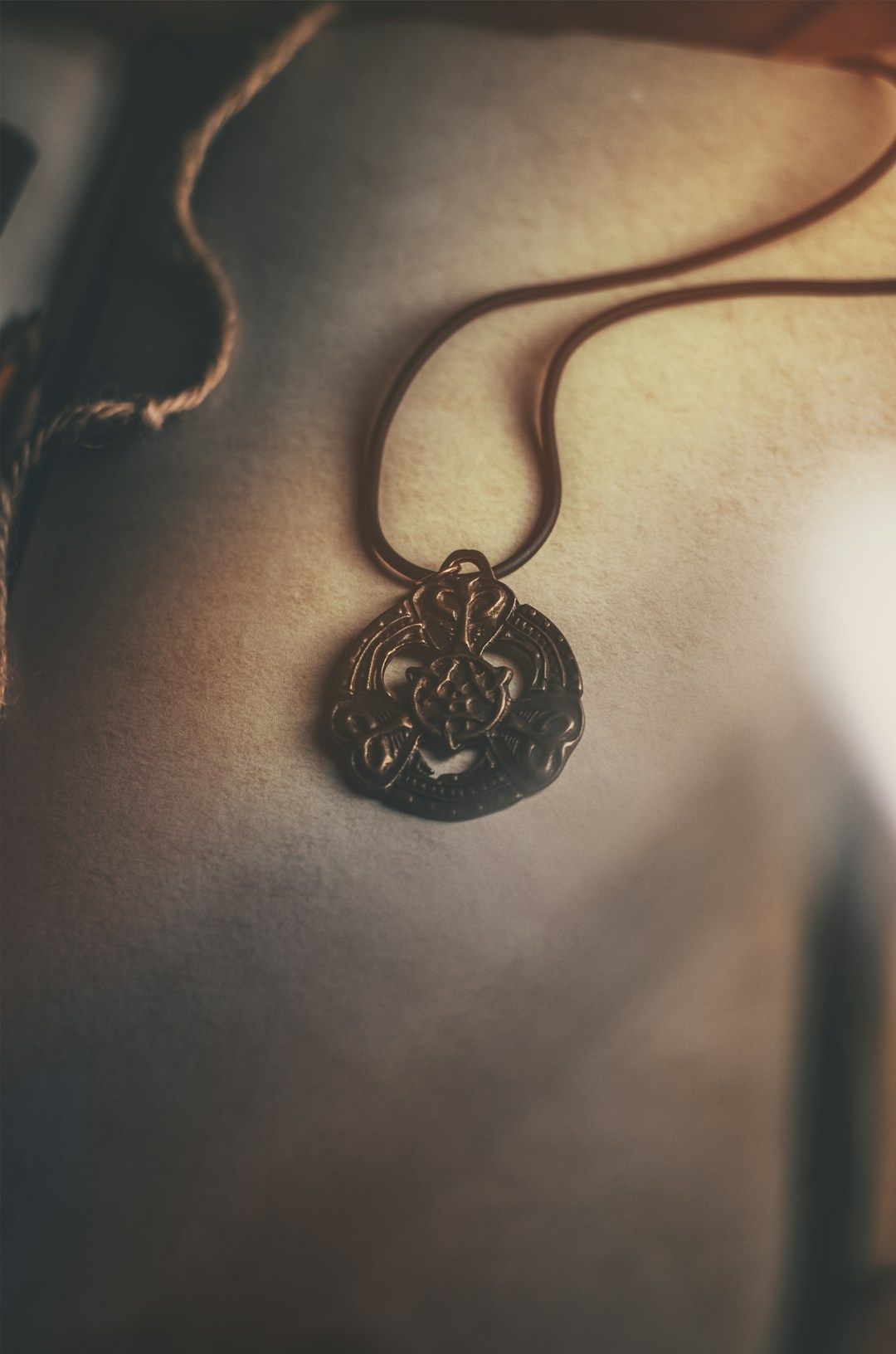
The “Great Radiance Talisman” (大光符) has been passed down for generations. I learned it from Master Yuan (袁至兑师父) many years ago. Today it is still my favorite and most used talisman. While traditionally this talisman is drawn over a sick person in Daoist healing rituals, I was given permission to use it in this manner so that its benefits shared more widely.
Its function is simple — It brings light to where there is darkness.
Each pendant is personally blessed and consecrated before it is shipped.
Its function is simple — It brings light to where there is darkness.
Wearing this pendant is like carrying a blessing for protection, healing, and prosperity. In Daoist culture, prosperity is not only about money, but also about opportunities, positive energy, and smooth progress in life.
This 5 × 3.5 cm amulet is made of sacred lightning struck Jujube wood (雷击枣木) is a beautiful dark wood accented with a brown braided cord. It creates an elegant look that works with any style from traditional to contemporary.
On the reverse side is the Temple logo and name in Chinese (安德福神宫, ān dé fú shén gōng), the Temple of Peace and Virtue.
Each pendant is personally blessed and consecrated before it is shipped.
A Gift with Meaning
Perfect for anyone:
• who wants to awaken or bolster their inner Light.
• who feels affected by external energies
• is under pressure or feeling emotionally unstable
• seeking a spiritual shield for daily protection
Each talisman is more than just an object — it's an awakened vessel of that radiates Celestial Light, which brings awakening, peace, healing, and protection.
Why Lighting-Struck Date Wood
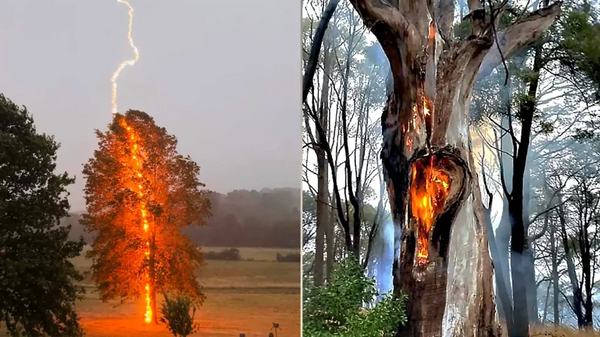
Harness the profound power of nature with this unique amulet, carved from rare, sacred Jujube wood (雷击枣木) that has been transformed by a lightning strike. In Daoist tradition, such wood is considered spiritually awakened, possessing immense purifying energy.
This wood embodies the harmonious essence of yin and yang, containing the refined energy of the five elements. It stores the righteous energy of celestial thunder and is believed to house spiritual entities and divine forces. In the practice of esoteric arts, it plays a significant supporting role.
How to Use
Normally, it is worn daily or kept near your pillow at night. If you want to shine Light into your environment face it outward. If you wish to help awaken or strengthen your Light have it face inward.
You may also place it on an altar or sacred space with a sincere heart.
Hang it in your home’s entryway or above a door to protect a space.
You may also place it on an altar or sacred space with a sincere heart.
Hang it in your home’s entryway or above a door to protect a space.
$80 + shipping
As soon as I put the amulet on, I felt an almost unbearable Light and warmth penetrating my chest. Thank you so much for your teachings and all that you have given!
Marie couturier,, Quebec
Return Policy: We accept returns for defective products only and will exchange unused products up to 30-days from delivery.
Get in touch
-
2105 Tolbert Hollow Road, Bradyville, TN 37026
-
Info@medicalqigong.org
-
800-848-0649
The IMQC is dedicated to providing high quality Medical Qigong instruction for students all over the world.
The IMQC is a federal non-profit public benefit corporation 501(c)(3) operating under the auspices of the Temple of Peace and Virtue.
Copyright © 2022
v
v
Search
Search
Search
